Crash and rollover recovery
Accident Recovery in Ontario, CA
Uprighting, winching and clearing heavy trucks after a crash, with traffic control and documentation.
- Dispatch answers 24/7
- Heavy wreckers, rotators and lowboys
- Written invoice estimate before the work starts
Accident Recovery When the Freeway Is Blocked
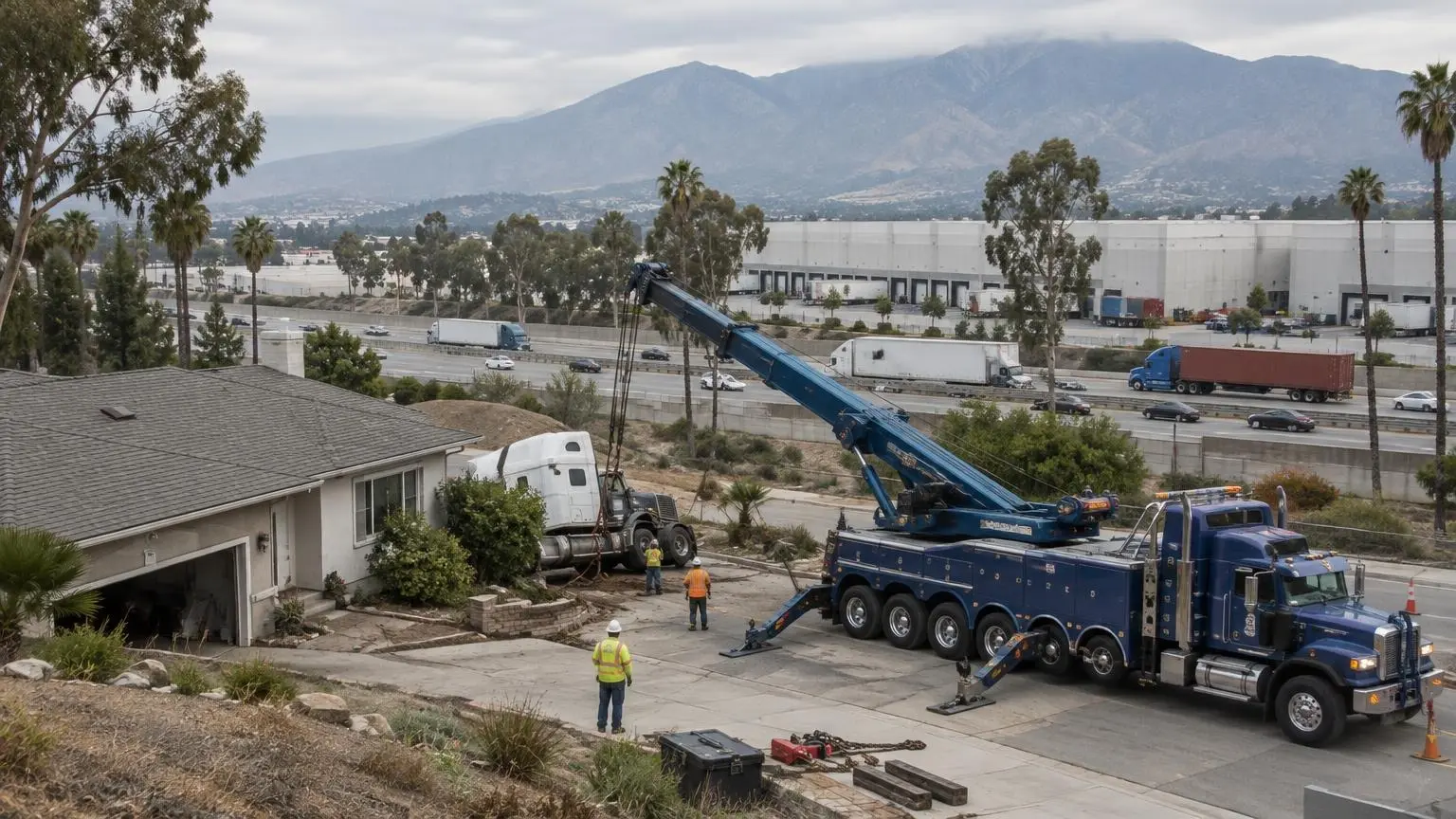
Accident recovery for heavy trucks is different from a breakdown tow. The unit is usually damaged, the load may be spilled or leaking, lanes are closed, and agencies are on scene. In Ontario, those scenes happen on a corridor where roughly 600,000 truck trips a day are generated by the Inland Empire's warehouses, according to a 2023 report, so a crash can back up traffic for miles in minutes.
Who runs the scene
On state highways, the California Highway Patrol manages the scene. CHP maintains a rotation tow program that distributes service calls among tow companies, and if the scene manager needs special equipment, the officer can go to the next company on the list with the necessary resources. If the call reaches us, we respond with what the job needs. If you are the driver, tell the officer what you need and who you are paying.
Wind, rain and heat
A rollover can happen in any weather. The Cajon Pass area on I-15 north of Ontario is known for high wind, and Santa Ana gusts there can push high-profile vehicles off course. Winter rain is uncommon, about 11.64 inches a year in Ontario, but a rare rain after a dry spell can make roads slick.
Recovery methods
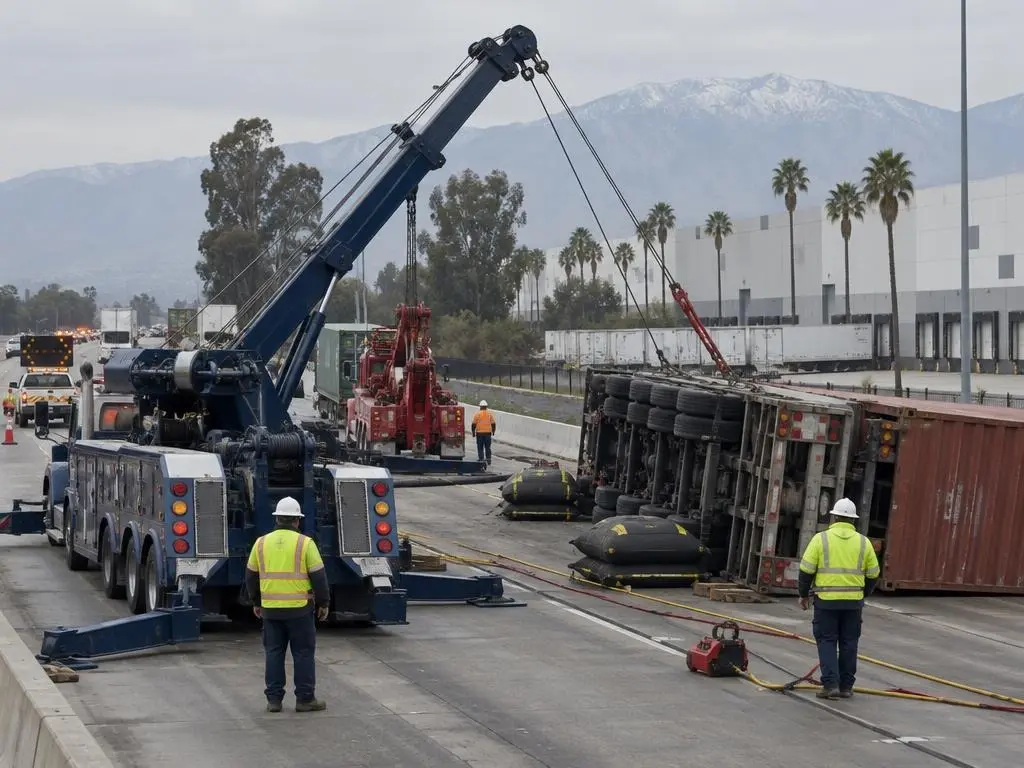
We choose among several methods. A winch line can pull a unit upright when the ground is firm. Air cushions can lift a truck gently. A rotator uprights a loaded tractor-trailer without dragging it. A second wrecker may be needed to hold a trailer while the tractor is moved. The plan depends on cargo, fuel and where the unit lies.
Spilled loads and fluids
We tell you when to stay back. Diesel, oil and cargo spills can need the fire department or a hazmat contractor. If the load is regulated, we need to know before we arrive, and the scene manager decides who handles cleanup.
After the scene is cleared
Once lanes are open, the unit still needs a safe place to go. We can tow to a yard, a shop or a storage lot. Storage is billed by the day, so we ask the owner or insurer for instructions early and move the unit when they approve.
Insurers and fleets
For claims, documentation matters. We take photos where the scene allows, note storage and tow locations, and provide a written invoice estimate. Insurers and fleet safety managers can call dispatch to confirm status and the unit's location.
Accident Recovery Services
From a first call at the scene to storage and release of the unit.
Rollover and jackknife recovery
Uprighting and clearing with winch lines, air cushions or rotators.
Traffic control support
Cones, lights and lane setup in coordination with CHP and Caltrans.
Load transfer
Cargo moved to another trailer when a unit cannot be uprighted loaded.
Debris and spill support
Cargo and debris cleared from the roadway where permitted.
Secure storage
Damaged units held until the owner or insurer authorizes release.
Insurer and fleet coordination
Photos, tow location, storage details and clear billing.
Typical Accident Recovery Costs
| Service | Typical range (published rate sheets) |
|---|---|
| Heavy wrecker recovery, per hour | about $350 to $850 |
| Rotator, per hour | about $790 to $1,500 |
| Additional wrecker, per hour | about $560 |
| Air cushion unit, per hour | about $932 |
| Labor, per person per hour | about $122 to $175 |
| Storage | about $65 to $100 per day |
Rates vary by unit, distance, scene and time of day. Your written invoice estimate is the price.
How Recovery Proceeds
1. Call dispatch
Location, unit, load, hazmat, injuries and agencies on scene.
2. Plan the recovery
The operator walks the scene and picks the equipment with the scene manager.
3. Upright and clear
Winch lines, air cushions or a rotator, with traffic control in place.
4. Tow or transfer
The unit is towed, or the load is moved to another trailer.
5. Store and document
Storage location, photos and a written invoice estimate for the payer.
Accident Recovery Questions
Who decides which tow company responds at a CHP scene?
CHP uses a rotation list to distribute calls, and the scene manager can go to the next company that has the equipment needed. Tell the officer your needs.
Do you handle rollovers with a load?
Yes. The load, fuel and ground conditions decide the method. A rotator or load transfer may be needed.
Can my insurer reach you?
Yes. Insurers and fleet managers can call dispatch for the unit's location, storage and billing.
What should I do at the scene?
Get to safety, call 911 for injuries, tell the dispatcher about fuel, cargo or hazmat, and stay out of traffic.
Accident Recovery Service Areas
- Heavy Duty Towing in Ontario, CA
- Heavy Duty Towing in Rancho Cucamonga, CA
- Heavy Duty Towing in Upland, CA
- Heavy Duty Towing in Montclair, CA
- Heavy Duty Towing in Chino, CA
- Heavy Duty Towing in Chino Hills, CA
- Heavy Duty Towing in Fontana, CA
- Heavy Duty Towing in Rialto, CA
- Heavy Duty Towing in Colton, CA
- Heavy Duty Towing in San Bernardino, CA
- Heavy Duty Towing in Pomona, CA
- Heavy Duty Towing in Claremont, CA
- Heavy Duty Towing in Eastvale, CA
- Heavy Duty Towing in Jurupa Valley, CA
- Heavy Duty Towing in Norco, CA
- Heavy Duty Towing in Corona, CA
- Heavy Duty Towing in Riverside, CA
- Heavy Duty Towing in Redlands, CA
- Heavy Duty Towing in Bloomington, CA
- Heavy Duty Towing in Diamond Bar, CA
Get a Accident Recovery Estimate
Call (909) 552-8200 for accident recovery in Ontario, CA.