
Lowboys and landolls
Heavy Equipment Transport in Ontario, CA
Machines moved from yard to job site, and stuck equipment recovered.
- Dispatch answers 24/7
- Heavy wreckers, rotators and lowboys
- Written invoice estimate before the work starts
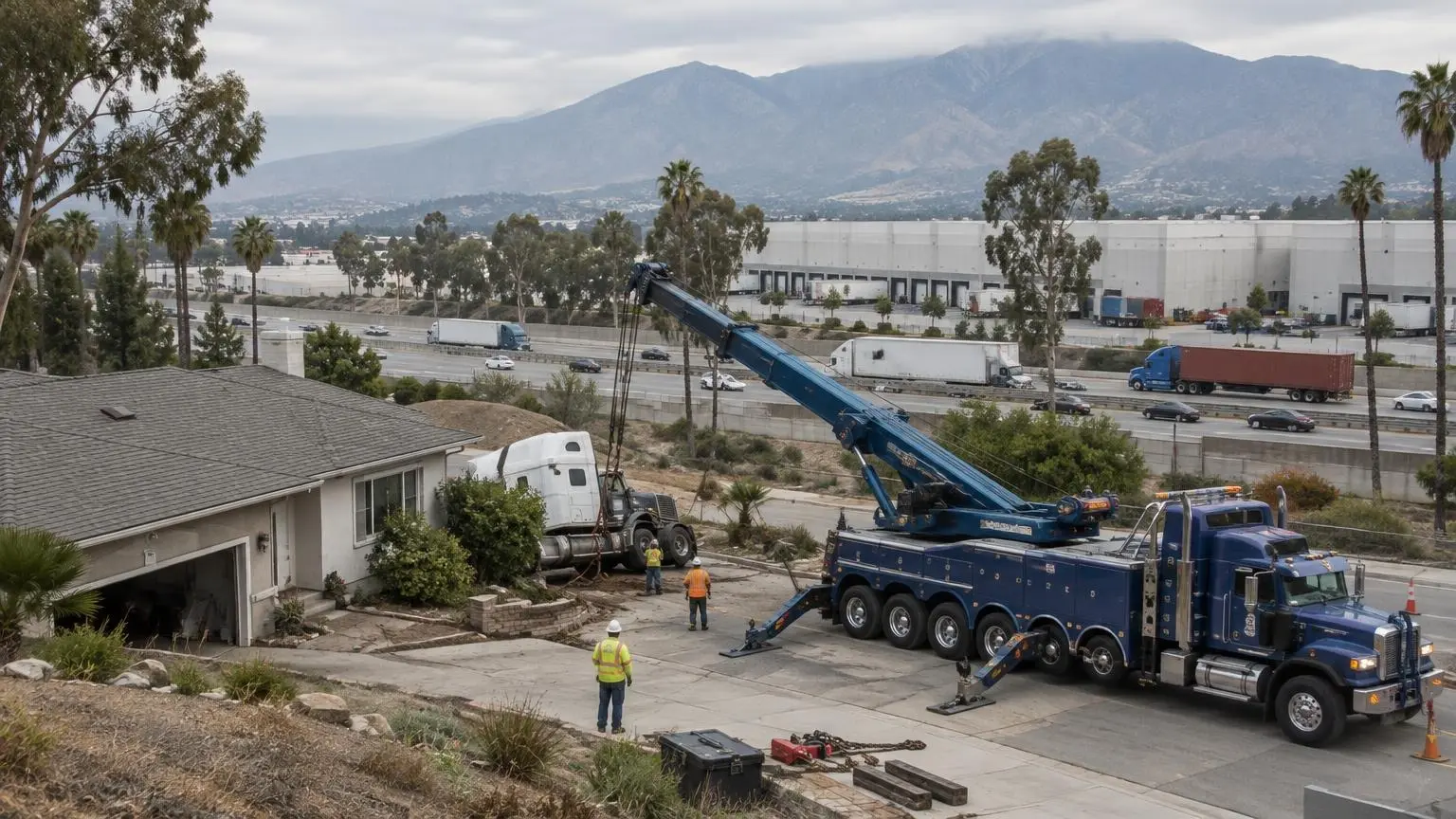
Heavy Equipment Transport for Inland Empire Job Sites
Heavy equipment transport in Ontario means moving machines too big or too slow to drive on public roads: excavators, wheel loaders, dozers, skid steers, forklifts, boom lifts and compactors. Contractors across the Inland Empire need machines moved between yards, rental shops and job sites, and the region's warehouse building has kept that demand steady.
The right trailer
A lowboy has a low deck so tall machines clear bridges. A landoll has a tilting bed that lets tracked equipment drive or winch on. Smaller machines may ride on a deck-over trailer or a rollback. The correct trailer depends on weight, width, height and ground clearance. Give us the make, model and operating weight, and whether the machine has tracks, tires or a long boom.
Securement and permits
Equipment must be chained and strapped to rated points. Oversize and overweight loads can need permits and set routes. We discuss dimensions before we dispatch, so there are no surprises. Tell us if the machine is wider than the trailer, if it has an attachment, or if it needs to travel with a bucket or boom folded.
Recovering stuck equipment
Equipment gets stuck: sunk in soft ground, tipped on a slope, high-centered on a berm or broken down in a pit. We use heavy wreckers, winch lines and a lowboy together to get the machine out and onto a trailer. Some machines can be driven, some cannot, and some are safe to move only after a mechanic checks them.
Who hires us
Grading and excavation contractors, warehouse builders, landscapers, rental yards, farms and public works crews. The Inland Empire has about 1 billion square feet of warehouse space and thousands of warehouses, and a lot of equipment has been moved to build them.
What to have ready
- Make, model and approximate operating weight.
- Width, height and length with attachments.
- Pickup address and delivery address, with gate or access limits.
- Whether the machine runs and drives onto a trailer.
- Who is paying: contractor, rental company, owner or insurer.
- Timing: a set window or an urgent call.
Safety on the ground
Equipment moves and recoveries happen on uneven, soft or crowded ground. We ask about slopes, overhead lines, trenches and nearby people before the wrecker arrives. The operator may refuse to load a machine until it can be done safely.
Same-day and emergency moves
A broken-down machine on a critical job can cost more than its tow. Dispatch answers 24/7, and the dispatcher gives you an honest estimate on arrival time for the right trailer.
Equipment We Move
Machines of many sizes, moved with the right trailer and securement.
Excavators and track equipment
Tracked machines loaded on lowboys and landolls.
Loaders and dozers
Heavy wheeled and tracked machines moved to job sites.
Skid steers and compact equipment
Smaller machines on deck-over or rollback trailers.
Lifts and forklifts
Boom lifts, scissor lifts and forklifts moved without damage.
Stuck equipment recovery
Winching and lifting machines out of soft ground or off slopes.
Disabled machine hauling
Machines that cannot run, loaded with winch lines or cranes.
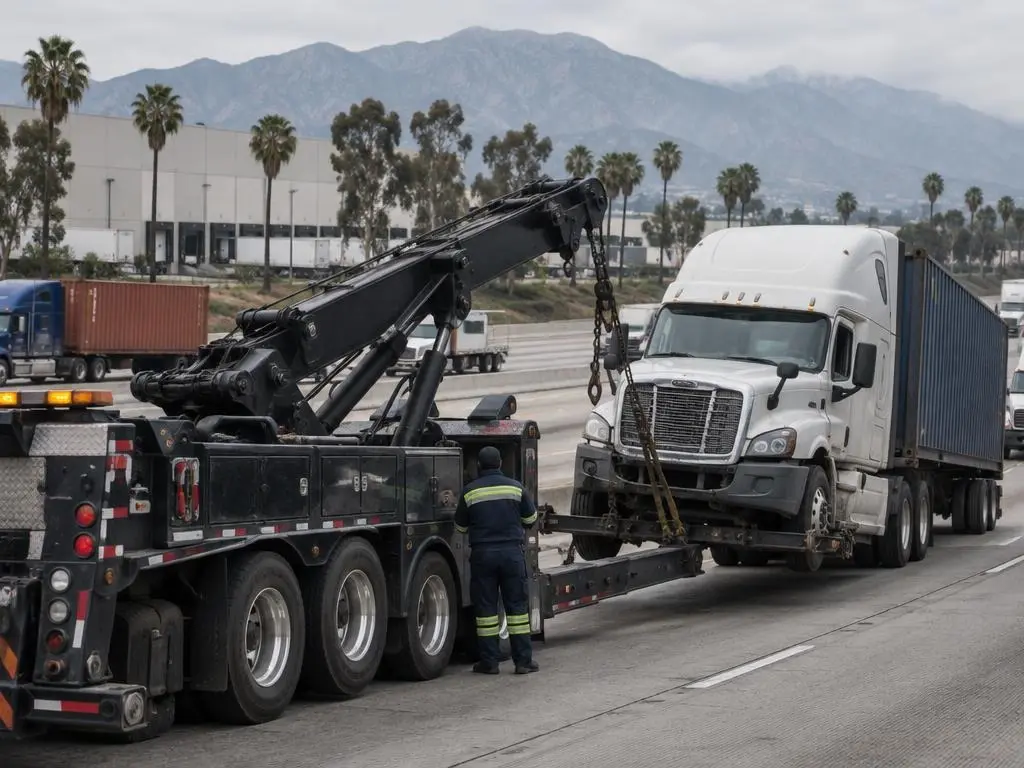
Typical Equipment Transport and Recovery Costs
| Service | Typical range (published rate sheets) |
|---|---|
| Road tractor, per hour | about $300 |
| Heavy wrecker for recovery, per hour | about $350 to $850 |
| Heavy tow hook-up and mileage | about $450 plus $9.50 to $10 per mile |
| Labor, per person per hour | about $122 to $175 |
| Rotator or crane, per hour | about $790 to $1,500 |
| Storage | about $65 to $100 per day |
Rates vary by unit, distance, scene and time of day. Your written invoice estimate is the price.
How an Equipment Move Works
1. Share the machine details
Make, model, weight, dimensions and attachments.
2. Pick the trailer
Lowboy, landoll or rollback, based on size and weight.
3. Plan the route
We check permits and any limits on access, height or width.
4. Load and secure
Chains and straps on rated points, with the attachment folded or removed.
5. Deliver and unload
To the job site or yard, with an invoice estimate.
Heavy Equipment Transport Questions
What is the difference between a lowboy and a landoll?
A lowboy has a low fixed deck for tall machines. A landoll has a tilting deck that lets equipment drive or winch on.
Can you move a machine that does not run?
Yes, with winch lines and heavier equipment. Tell us about the condition so we can plan.
Do you handle permits?
Oversize and overweight loads can need them. Tell us the dimensions, and we discuss what is required before the move.
Can you recover equipment stuck in mud or a slope?
Yes. We use heavy wreckers and winch lines, with a trailer for transport after recovery.
Heavy Equipment Transport Service Areas
- Heavy Duty Towing in Ontario, CA
- Heavy Duty Towing in Rancho Cucamonga, CA
- Heavy Duty Towing in Upland, CA
- Heavy Duty Towing in Montclair, CA
- Heavy Duty Towing in Chino, CA
- Heavy Duty Towing in Chino Hills, CA
- Heavy Duty Towing in Fontana, CA
- Heavy Duty Towing in Rialto, CA
- Heavy Duty Towing in Colton, CA
- Heavy Duty Towing in San Bernardino, CA
- Heavy Duty Towing in Pomona, CA
- Heavy Duty Towing in Claremont, CA
- Heavy Duty Towing in Eastvale, CA
- Heavy Duty Towing in Jurupa Valley, CA
- Heavy Duty Towing in Norco, CA
- Heavy Duty Towing in Corona, CA
- Heavy Duty Towing in Riverside, CA
- Heavy Duty Towing in Redlands, CA
- Heavy Duty Towing in Bloomington, CA
- Heavy Duty Towing in Diamond Bar, CA
Get a Heavy Equipment Transport Estimate
Call (909) 552-8200 for heavy equipment transport in Ontario, CA.